Hikikomori: Millions in Japan Living Behind Closed Doors
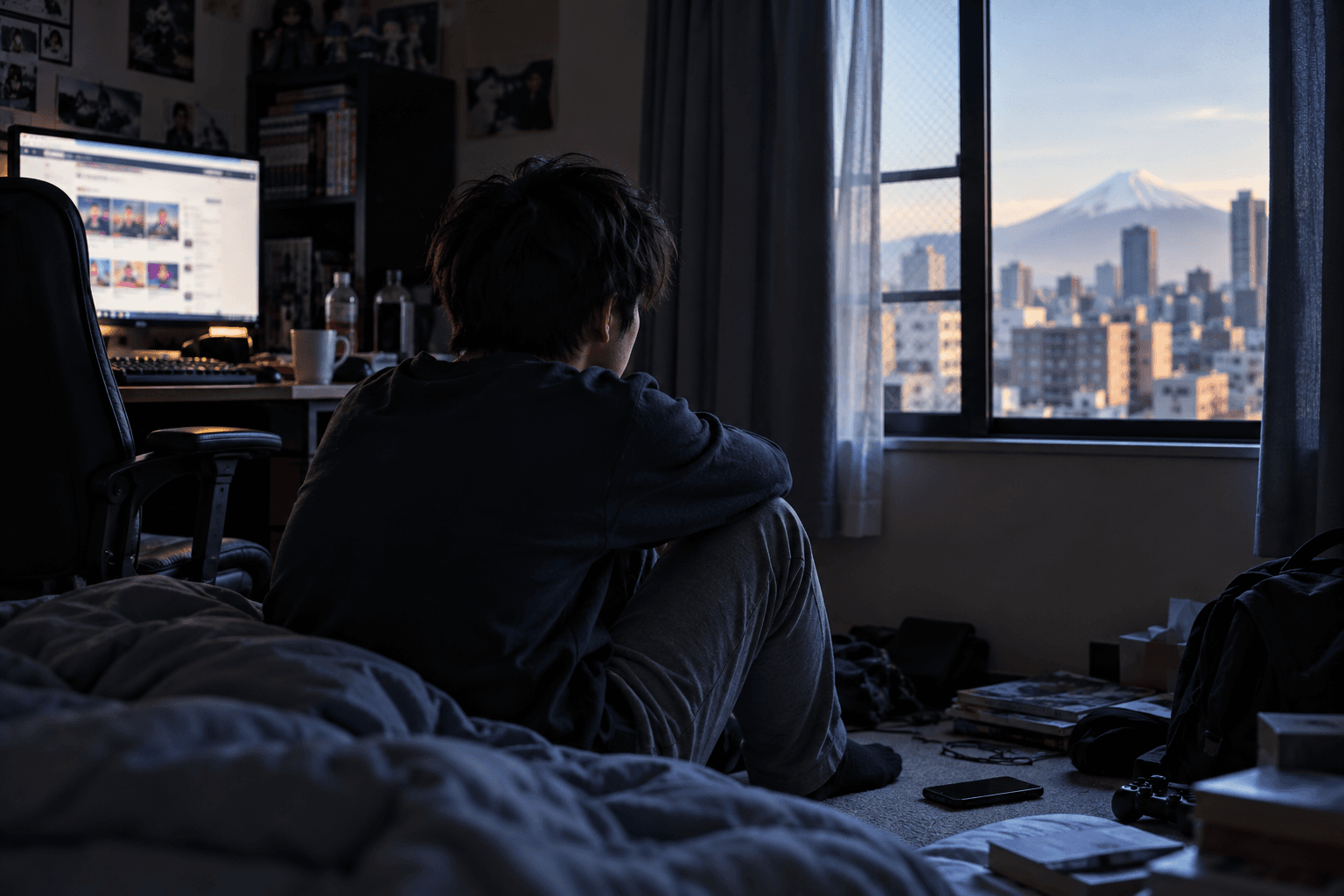
A young man in Japan once attended school regularly and spent time chatting with his friends. But at some point in his life, something changed. He stopped going to school and gradually began ignoring his friends' phone calls. Eventually, his room became his entire world. He spent day after day in front of a computer or lying in bed. He spoke to family members only when necessary and felt uncomfortable whenever someone suggested going outside. Months turned into years.
This is not just the story of one individual. Similar situations affect many people in Japan. The phenomenon of withdrawing from social life for an extended period is known in Japan as hikikomori.
Hikikomori generally refers to people who remain socially withdrawn for a prolonged period, staying away from school, workplaces and social interactions. Under a commonly used definition, social withdrawal lasting six months or longer is one of the key criteria.
However, not everyone experiencing hikikomori remains inside their home at all times. Some leave the house to visit nearby shops or take care of essential tasks but avoid social interaction. Others find it difficult even to leave their own rooms.
According to a 2022 survey by the Japanese government, an estimated 1.46 million people aged 15 to 64 in Japan were experiencing hikikomori. This figure highlights the scale of prolonged social isolation as an important social challenge in the country.
There is rarely a single explanation for hikikomori. Personal experiences, family circumstances, social pressures and psychological difficulties may all contribute to the situation.
Experiences such as being bullied or humiliated by classmates, failing examinations, falling behind in education, losing a job or facing excessive pressure at work can gradually push some people away from social life. Family conflict, depression and social anxiety may also play a role in certain cases. However, none of these experiences alone can be considered a universal cause of hikikomori.
Experiencing hikikomori does not automatically mean that a person has a particular mental health disorder. Some individuals may have mental health difficulties, while others may withdraw from society because of different personal, family or social circumstances.
In many cases, the process begins gradually. A person may stop meeting friends or become reluctant to attend social gatherings. Over time, the habit of going outside becomes less frequent. After a prolonged period of isolation, returning to education, finding employment or rebuilding social relationships can become increasingly difficult.
Fear of judgment and rejection may also contribute to the problem. After spending a long time away from others, a person may worry about what to say when meeting people again or how to explain their prolonged absence. Although staying at home may initially provide temporary relief, it can gradually make returning to social life more challenging.
Japan has established various consultation centres and support programmes to address hikikomori. These initiatives focus on counselling individuals and their families, building trusting relationships and gradually helping people reconnect with others. Depending on individual needs, mental health services and assistance with returning to education or employment may also be important.
Rather than forcing someone to leave their home, it is important to understand their circumstances and the difficulties they are experiencing. Patience, continued support and respect for the person's emotional readiness are essential parts of helping them recover their social connections.
From the outside, someone who spends day after day inside their room may appear lazy or antisocial. But it is unfair to reach such conclusions without understanding the fear, anxiety or distress that may lie beneath the surface.
There is no single path out of hikikomori. For some people, support from family members and friends may make a significant difference. Others may need long-term professional assistance.
The most important thing is to try to understand people who have become socially isolated rather than blaming them. A closed door does not mean that the person behind it has lost the opportunity to begin again. With understanding, patience and appropriate support, rebuilding connections with the outside world may still be possible.
Sources: Japan's Ministry of Health, Labour and Welfare; Frontiers in Psychiatry.